Why You Actually Need Explosion-Proof Quartz in Your Bathroom Heater
If you’ve ever put an infrared heater in a bathroom, you know the vibe. You step out of a steaming shower into a chilly room, and you want that heat now. But there’s a hidden problem with ceiling heaters in wet rooms: thermal shock. Think about it. You have a heating element glowing at several hundred degrees. Suddenly, a stray drop of cold water hits it. That instant temperature crash creates a massive amount of stress on the material. If you’re using cheap glass or low-grade quartz, it doesn’t just crack—it shatters.
Let’s talk about “Explosion-Proof” Quartz
Now, when we say “explosion-proof,” it sounds a bit dramatic. It doesn’t mean the lamp can survive a bomb. It just means the material is tough enough to handle rapid temperature swings without giving up the ghost. We use high-purity fused quartz because it doesn’t expand or contract violently when things get hot and cold. It’s designed specifically to bridge the gap between a scorching filament and a humid, misty shower. The quartz tube is basically the bodyguard for the heater. If that tube fails, the halogen gas inside leaks out, and your filament burns out in a heartbeat.
Keeping things safe (and lasting longer)
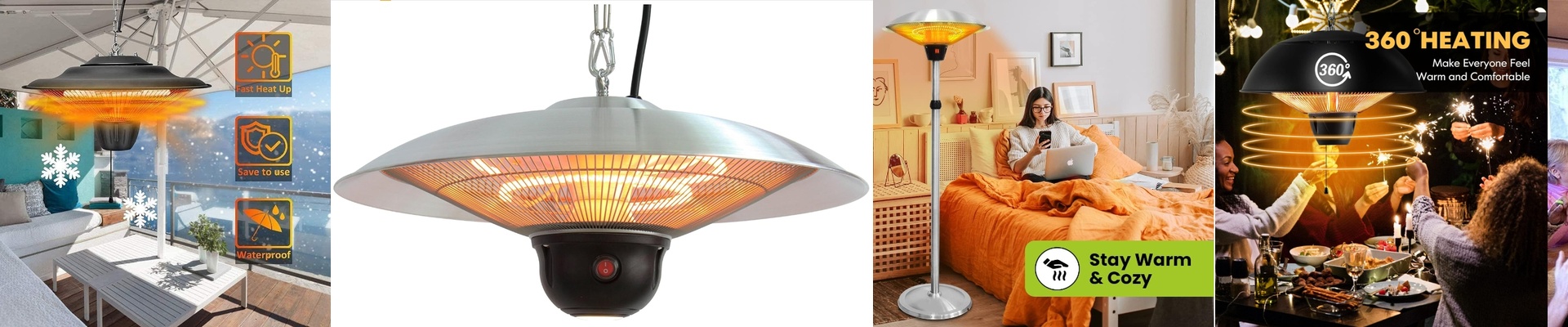
Most of these units use shortwave infrared. I love this tech because it doesn’t waste time heating up the air in the room first. Instead, the heat travels straight through the air and hits your skin. It feels like stepping into a patch of sunlight. But here is the catch: the seals have to be perfect. If moisture sneaks past the seal and gets into the tube, it oxidizes the tungsten filament. You’ll go from a lamp that should last thousands of hours to one that dies in a few dozen. It’s a frustrating way to waste money.
A few things to watch for during install
These high-wattage lamps are great for instant warmth, but they’re hungry for power. If you’re putting a few of these in one bathroom, double-check your wiring. You want a gauge that can handle the peak current without the voltage dropping. You won’t blow up the lamp if you overload the circuit, but you’ll definitely be tripping your breakers, which is a pain. And one last tip: remember that even “explosion-proof” quartz is still glass. It can handle the heat and the steam, but it can’t handle a hammer or a clumsy slip of a tool. Just be gentle with the fixture while you’re getting it mounted, and you’ll be golden.