
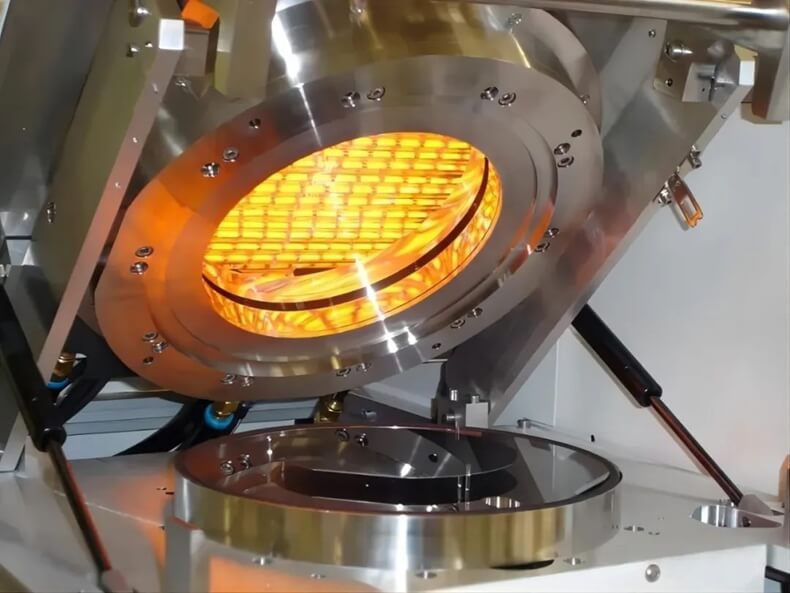
Keeping IR Lamps Safe Around Volatile Chemicals
Heating silicon wafers during chemical cleaning is a delicate balance. You need precise IR energy, but you’re doing it right next to flammable solvents. That’s a recipe for disaster. One tiny spark or a single crack in a quartz tube, and you’ve got a catastrophic problem on your hands. We don’t take those risks. Instead of using open-element designs, we wrap everything in specialized hermetic encapsulation.
The Secret to the Seal
Think of it as a protective shell. We house the IR lamps in custom quartz or sapphire envelopes that act as a wall between the heating element and those dangerous chemical vapors. We use high-temperature vacuum sealing to make sure no flammable gases can sneak inside. If a tube happens to fail, the encapsulation keeps the filament from ever touching the air around it. And because these things go through rapid heating and cooling, we use specific alloys for the pinch-seal. It keeps the glass from snapping under the stress of constant power cycles.
Fighting Heat and Corrosion
If your seal fails, your stability in the chemical bath goes with it. To stop that, we add chemical-resistant coatings to the outside of the envelope. Why? Because corrosive agents love to etch quartz. Once that happens, you get micro-cracks. Those cracks lead to a premature burn-out, and nobody wants to be replacing lamps mid-cycle. Here is the tricky part: the enclosure traps heat. Since the lamp isn’t sitting in open air, it runs hotter. To fix this, we usually dial the wattage back a bit or crank up the cooling airflow. It keeps the filament from hitting its breaking point.
Making it Work in Hazardous Zones
The wiring is where a lot of people mess up. You can’t just plug these in. We use explosion-proof conduits, sealed cable glands, and grounded housings to kill any static buildup. It keeps electrical arcs contained. Basically, we take something that could be a dangerous ignition source and turn it into a reliable tool. You get the heat density you need for your wafers, and you get to sleep at night knowing your plant isn’t going to blow up.