
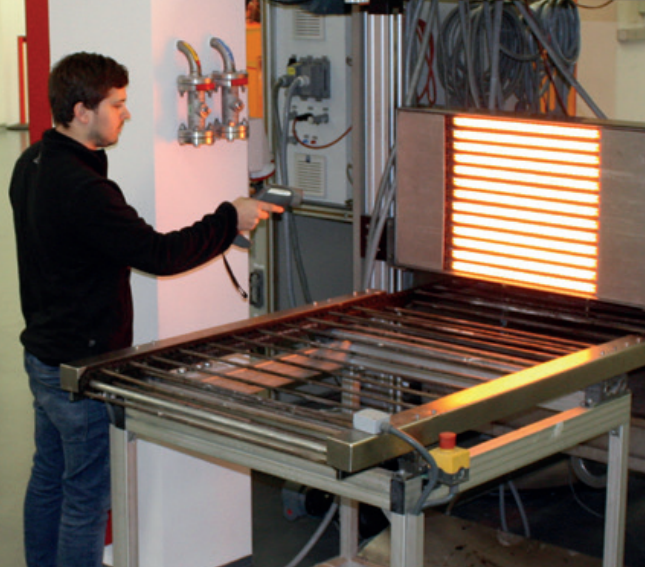
Getting Your Fab’s Heat Under Control with UHP Infrared
If you’re running a semiconductor fab, you already know that heat is everything. But as we move toward these “Smart Fabs,” the old way of doing things—relying on traditional resistive heating—just doesn’t cut it anymore. It isn’t about following a trend. It’s about the data.
Why IR actually makes sense
Here is the thing: in a digitized line, you can’t afford to wait. You need a heat source that reacts the second you tell it to. That’s where infrared (IR) lamps come in. Instead of wasting time heating up the air around the wafer, IR sends heat directly to the target. We build these systems to ramp up and cool down fast. It means your PLC can actually dial in the temperature with real precision. No more fighting that annoying thermal lag that makes old-school ovens such a headache.
The nitty-gritty on the hardware
We use high-purity quartz envelopes for these lamps. Why? Because the last thing you want is metallic contamination leaching onto your wafers. We spend a lot of time tuning the wattage and voltage. We want that heat to hit the wafer surface evenly, every single time. One quick tip: pay attention to your connectors. We use specific interfaces because a loose connection at high current is a recipe for disaster—you’ll get arcing, and your lamps will burn out way too soon. Also, keep an eye on your chassis cooling. These lamps put out a massive amount of heat. If the air around the lamp ends gets too hot, you’re just shortening the life of your filaments. Keep it cool, and they’ll last.
Making it work with your data
In a modern fab, every single part needs to tell you something. IR systems play nice with closed-loop PID controllers and pyrometers. You can track your power draw in real-time and see exactly how it affects your wafer yield. It’s all right there on the screen. Plus, IR takes up way less space. Since the heating zone is smaller, you can fit more processing steps into your cleanroom without feeling cramped. You get more wafers through the door, and when you need to tweak things, you do it in the software. No more messing around with manual hardware adjustments. It’s just easier.